Florida's towering oaks, sprawling banyans, and stately royal palms define our landscapes, but the same warm climate and seasonal storms that help them grow can also weaken them over time. A tree that looks healthy from a distance may hide serious structural problems that only become obvious after it falls. Knowing how to spot a hazardous tree on your property can protect your home, your family, and your neighbors while saving you thousands of dollars in storm damage repairs. This guide walks through the most common warning signs arborists look for when assessing tree risk in Southwest Florida.
Leaning Trees and Shifting Trunks
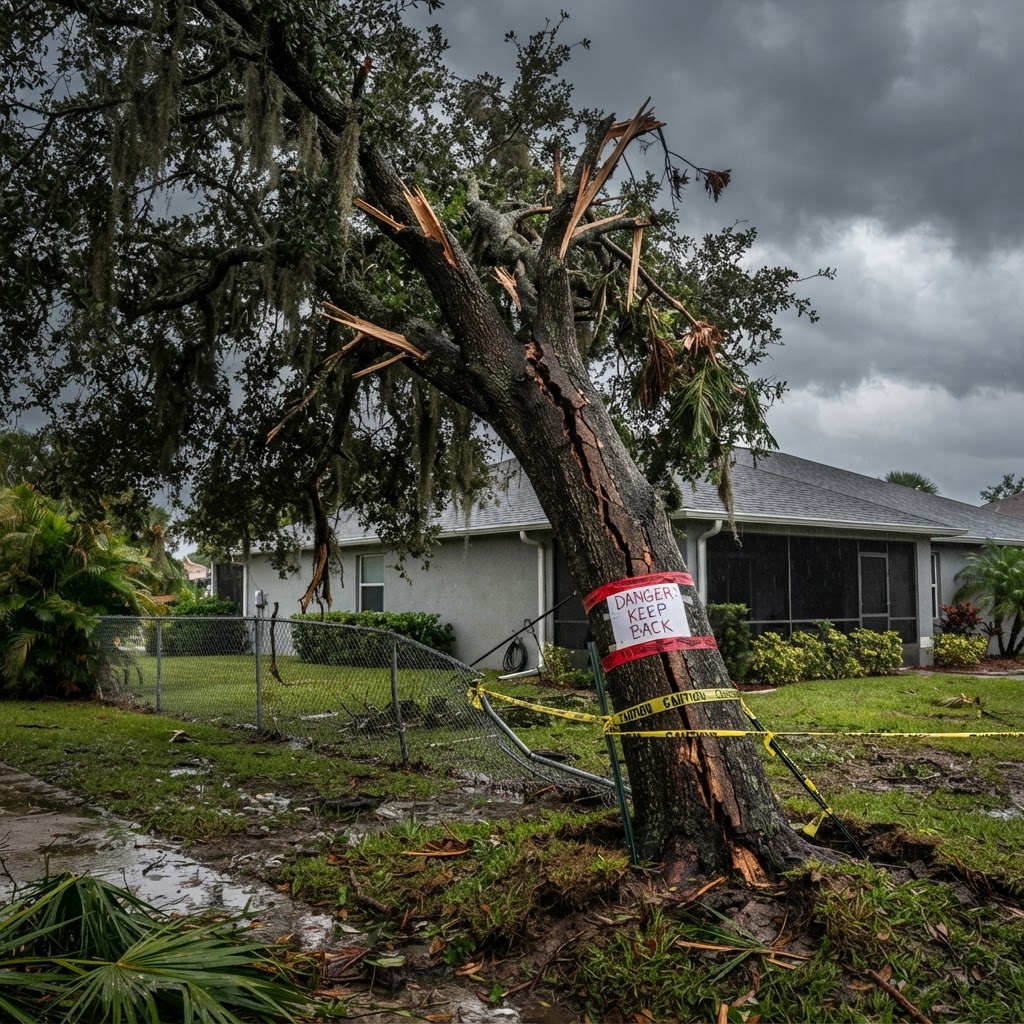
A slight, natural lean is normal for many trees, but a sudden or increasing lean is one of the clearest indicators of structural failure. If a tree has begun to lean more than 15 degrees from vertical, or if you notice cracked soil or lifted roots on the opposite side of the lean, the root system may be failing. After heavy rains saturate the ground, trees with compromised roots are especially vulnerable to toppling. Compare photos of the tree from previous years to determine whether the lean has worsened. When in doubt, treat any new or worsening lean as an emergency and have a certified arborist evaluate it immediately.
Cracks, Splits, and Cankers in the Trunk
Vertical cracks running down the trunk often point to internal decay or frost damage, while horizontal splits can mean the tree is literally pulling itself apart under stress. Cankers—sunken, dead patches of bark—indicate a fungal or bacterial infection that is killing tissue beneath the surface. Multiple cracks on the same tree, especially near a major union where two large limbs meet, dramatically increase the chance of catastrophic failure during high winds. Look for sap oozing from cracks, peeling bark, or mushrooms growing at the base of the trunk, all of which suggest internal rot that has compromised the tree's structural integrity.
Deadwood, Hanging Limbs, and Canopy Dieback
Dead branches clinging in the canopy—often called "widowmakers" by arborists—can fall without warning, even on a calm day. If more than a quarter of the tree's canopy is bare, leafless, or covered in brown, dying foliage, the tree may be in irreversible decline. Pay close attention to limbs that extend over your roof, driveway, pool enclosure, or power lines. Even a moderate storm can send a dead limb crashing through a screen enclosure or onto a vehicle below. Regular pruning removes hazardous deadwood before it becomes a danger, and a professional can safely access the upper canopy where most dead limbs hide.
Root Problems and Soil Heaving
Because most of a tree's structural support is underground, root damage is both the most dangerous and the hardest problem to see. Construction, trenching, soil compaction from vehicles, and even repeated foot traffic can sever or suffocate roots. Look for mushrooms or conks growing near the base, soil that has lifted or cracked around the root flare, and girdling roots that wrap around the trunk and slowly strangle the tree. A tree with a damaged root system may appear healthy above ground right up until a hurricane exposes the weakness. If you have had excavation, utility work, or a new driveway installed near a mature tree within the last five years, have that tree inspected.
What to Do When You Spot These Warning Signs
If you notice any of these hazards, avoid standing or parking beneath the tree and keep children and pets away from the area. Document the issues with photos and note when you first observed them. Many problems can be resolved with strategic pruning, cabling, or bracing rather than full removal, but only a trained arborist can make that determination safely. At Sunshine Tree, our certified team provides hazard assessments, structural pruning, and complete tree removal throughout Fort Myers, Cape Coral, Naples, Bonita Springs, and Estero. We carry $1 million in liability insurance and offer 24/7 emergency response for storm-damaged or fallen trees.
- Schedule a professional hazard assessment before hurricane season begins
- Never attempt to remove a large or leaning tree yourself
- Ask for proof of insurance before hiring any tree service