Florida's year-round warmth and abundant rainfall create an ideal environment not just for lush, beautiful trees but also for the insects and pathogens that feed on them. A single pest infestation or fungal infection can spread quickly through a neighborhood, killing mature trees that took decades to grow. Early identification is the most effective defense a homeowner has, because many tree health problems are treatable in their early stages but irreversible once they've advanced. This guide covers the most common and destructive tree pests and diseases found in Southwest Florida, how to recognize their symptoms, and the steps you can take to protect your landscape investment.
Laurel Wilt Disease
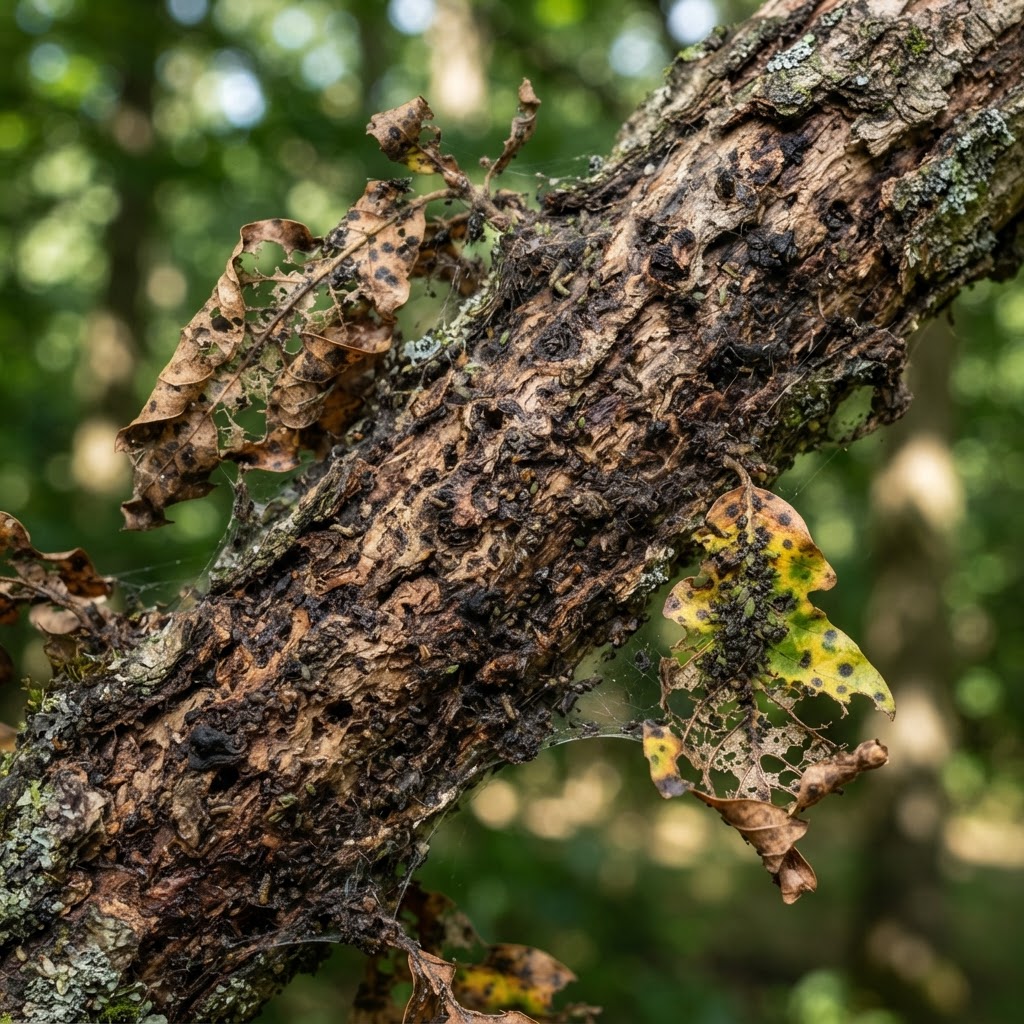
Laurel wilt is one of the most devastating diseases affecting Florida trees. It is caused by a fungus carried by the non-native redbay ambrosia beetle, which burrows into the wood of trees in the laurel family, including redbay, swamp bay, sassafras, and avocado. The fungus blocks the tree's water-conducting vessels, causing leaves to wilt and turn brown within weeks. Once a tree shows symptoms, there is no cure, and the disease spreads rapidly through connected root systems. If you have avocado trees or native laurels on your property, watch for sudden leaf drooping, dark streaks under the bark, and tiny holes with sawdust tubes on the trunk. Infected trees should be removed promptly to prevent the spread to nearby healthy trees.
Palm Weevils and Lethal Bronzing
Palms are icons of the Florida landscape, and two threats put them at particular risk. The palmetto weevil, North America's largest weevil, lays eggs in wounded or stressed palms; the grubs then tunnel through the crown, killing the tree from the top down. Watch for drooping, dying fronds in the center of the crown and a foul odor. Lethal bronzing disease, spread by a tiny plant-hopping insect, causes palms to drop their fruit prematurely, then develop discolored, wilting fronds. Both conditions are fatal once advanced, but preventive trunk injections of antibiotics can protect high-value specimen palms if caught early. Avoid over-pruning, which stresses palms and attracts weevils, and never remove green, healthy fronds.
Ganoderma Butt Rot
Ganoderma butt rot is a silent killer of palms across Florida. Caused by a soil-borne fungus, it decays the lower trunk from the inside out. The most obvious sign is a shelf-like mushroom, called a conk, growing on the lower portion of the trunk. By the time a conk appears, significant internal rot has already occurred and the palm is structurally unstable and beyond saving. There is no treatment; infected palms should be removed before they fall. Because the fungus persists in the soil, do not plant a new palm in the same spot. The disease spreads through contaminated soil and pruning tools, so sanitizing equipment between trees is essential for any professional crew.
Citrus Greening and Sooty Mold
If you grow citrus, you are likely familiar with citrus greening, a bacterial disease spread by the Asian citrus psyllid that has devastated Florida's citrus industry. Leaves develop asymmetrical blotchy mottling, fruit stays small and bitter, and trees decline over a few years. There is no cure, but nutrition programs can prolong the life of an infected tree. Sooty mold, by contrast, is a harmless black fungus that grows on the honeydew secreted by aphids, scale insects, and whiteflies. While it doesn't penetrate the leaf, a heavy coating can block sunlight and slow photosynthesis. Controlling the underlying insect infestation with horticultural oils or systemic treatments will eliminate the mold.
Protecting Your Trees Long-Term
Healthy trees resist pests and disease far better than stressed ones. Deep, infrequent watering during dry spells, proper mulching that keeps the root flare exposed, and scheduled fertilization tailored to Florida's sandy soils all build resilience. Annual inspections by a certified arborist catch problems early, when treatment is most effective and least expensive. If a tree is beyond saving, prompt professional removal prevents the disease or infestation from spreading to the rest of your landscape. At Sunshine Tree, our trained team diagnoses tree health issues and provides safe, insured removal and treatment services throughout Fort Myers, Cape Coral, Naples, Bonita Springs, and Estero.
- Inspect trees at least twice a year for early signs of pests and disease
- Avoid over-pruning palms, which attracts weevils and weakens the tree
- Remove infected trees promptly to protect neighboring healthy specimens