Trees add beauty, shade, and value to your property—until they become a liability. In Southwest Florida, where hurricanes, saturated soil, and lightning turn a sick tree into a falling hazard, knowing the signs you need tree removal can save you thousands in property damage and keep your family safe. Here are seven red flags every Fort Myers homeowner should watch for.
1. Large Dead Branches in the Canopy
A few dead twigs are normal, but large dead limbs—especially in the upper canopy—are a serious hazard. They can fall without warning in the next breeze. If more than 25% of the canopy is dead, the tree likely needs removal.
2. Cracks or Splits in the Trunk
Vertical cracks, deep splits, or seams in the main trunk signal structural failure. A tree that's cracking along its trunk is at high risk of splitting apart in a storm—often right down the middle.
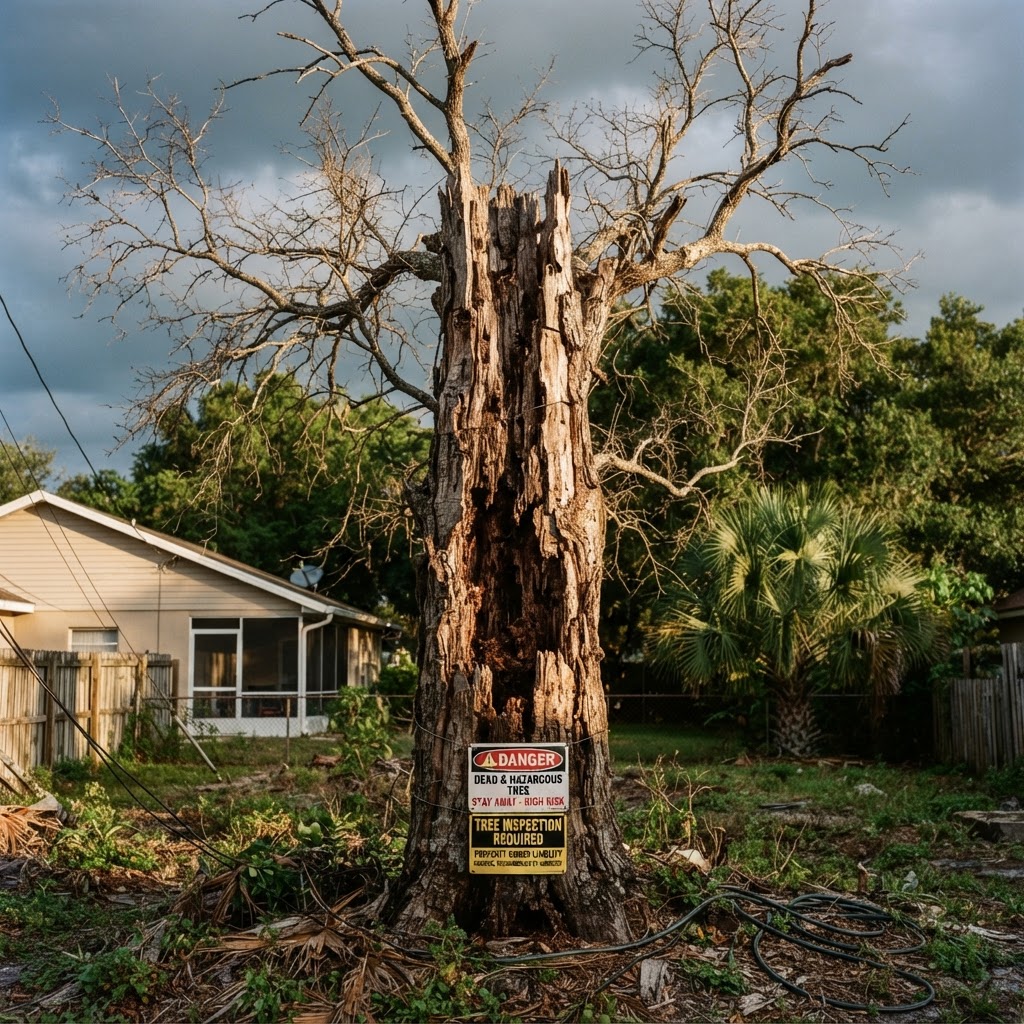
3. Hollow or Decaying Trunk
A tree can look alive on the outside while its structural core has rotted away. Tap the trunk—if it sounds hollow, or you see cavities and fungal growth, the tree's strength is compromised. A hollow trunk is a tree waiting to fail.
4. Fungal Growth and Mushrooms at the Base
Mushrooms or shelf fungi growing on the trunk or around the root flare are a sign of internal decay. Root rot is especially dangerous because it weakens the tree's anchor—you often won't see it until the whole tree topples.
5. The Tree Is Leaning Suddenly
Some trees grow at a natural angle—nothing to worry about. But if a previously straight tree suddenly leans, or the soil around the base is cracked and heaving, the roots have failed. This is an emergency; call a professional immediately.
6. Root Damage or Soil Compaction
Construction, driveway installs, or heavy equipment can sever or compact a tree's roots. Since roots carry water and hold the tree up, damage here often shows up years later as decline and instability. If your tree's roots have been disturbed, have an arborist assess its stability.
7. The Tree Is Damaging Your Property
Roots lifting a driveway, branches gouging your roof or siding, or a tree pressing against your foundation—when a healthy tree is actively damaging your home, removal may be the most cost-effective fix. Sometimes targeted trimming solves it; sometimes the tree has to go.
When in Doubt, Get an Inspection
Not every concerning tree needs to come down—skilled pruning, cabling, or root care can sometimes save a valued tree. The only way to know for sure is a professional assessment. A certified arborist can tell you whether removal is truly necessary and handle it safely if it is.